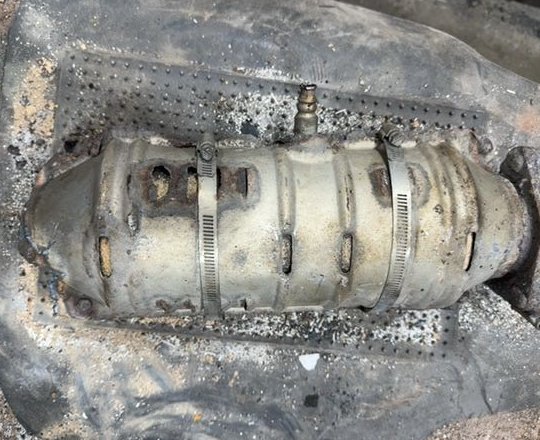
Foil vs. Bead Catalytic Converters: What's the Difference and What Are They Worth in 2026?
Most people selling scrap catalytic converters know the basics — platinum, palladium, rhodium, and a payout that varies wildly depending on what's inside. But ask someone to explain the difference between a foil-style and a bead-style catalytic converter, and you'll get a lot of blank stares. That gap in knowledge costs sellers money. If you don't know what you have, you can't argue for what it's worth.
This week's market recap breaks down both converter types, explains how they're valued, and shows you how to use that knowledge to get the best catalytic converter price today — whether you're selling one unit out of your shop or moving a full pallet of mixed cats from a Texas salvage operation.
What Is a Foil-Style Catalytic Converter?
A foil-style catalytic converter uses a thin, corrugated metallic substrate — typically made from a stainless steel alloy — wound into a honeycomb structure. The precious metal catalyst (platinum, palladium, and/or rhodium) is coated directly onto that metallic foil surface. These converters are lighter than ceramic units and handle heat more efficiently, which is why they show up frequently in performance vehicles, European imports, and some diesel applications.
From a scrap value standpoint, foil cats are interesting. They tend to have a lower overall weight, but the catalyst loading per gram of substrate can be competitive. The challenge is that the metallic substrate itself complicates the assay process — smelters have to account for the alloy composition, not just the PGM (platinum group metals) content. That's why a foil cat with strong PGM loading can be worth more than its weight suggests, or less, depending on who's buying and how they're processing it.
- Common in: European vehicles (BMW, Mercedes, Audi), performance cars, some diesel trucks
- Substrate material: Metallic stainless steel foil
- Weight profile: Lighter than ceramic
- PGM distribution: Can be high per gram, but harder to assay quickly
- Buyer comfort level: Varies — specialty buyers understand these better than general scrap yards
What Is a Bead-Style Catalytic Converter?
Bead-style catalytic converters use small alumina (aluminum oxide) beads as the substrate instead of a honeycomb structure. The precious metals are impregnated into or coated onto those beads, which are packed inside the converter housing. These were more common in older North American vehicles — think late 1970s through the mid-1990s — before ceramic honeycomb designs became the industry standard.
Bead cats have a loyal following among experienced scrap buyers. The loose bead structure makes it easier to sample and assay the material, and the alumina bead substrate doesn't complicate the smelting process the same way metallic foil does. That said, because these are predominantly found in older vehicles, the PGM loadings can vary significantly — some early bead converters were loaded heavily with platinum when rhodium and palladium were cheaper alternatives, which makes them surprisingly valuable today when the platinum price today is factored in.
- Common in: Older domestic vehicles (1975–mid-1990s), some industrial equipment
- Substrate material: Alumina (aluminum oxide) beads
- Weight profile: Often heavier due to bead density
- PGM distribution: Can be platinum-heavy depending on era
- Buyer comfort level: Generally high — well-understood by specialty buyers
If you're sorting a mixed load in El Paso and you crack open a converter to find loose beads rattling around inside, don't assume it's low-value. Get it tested. The platinum price today makes some of those older bead units genuinely worth tracking down.
How Platinum, Palladium, and Rhodium Prices Drive Cat Converter Value in 2026
The scrap catalytic converter market doesn't have a fixed price list. Every quote you get is a downstream calculation: what PGMs are inside, how much of each, what those metals are trading for today, and what margin the buyer is working with. That's true whether you're selling in El Paso or anywhere else in Texas.
In 2026, the PGM market has continued to reflect the broader shift toward electrification and changes in industrial demand. Palladium, which dominated converter loadings in gasoline vehicles for decades, has seen price pressure as EV adoption reduces the pool of new ICE vehicles being manufactured. Rhodium — historically the most volatile of the three — has remained a critical material for three-way catalysis, and its price continues to move fast. Platinum, often used more heavily in diesel applications and in older bead-style converters, remains a significant part of how buyers value certain units.
What this means practically:
- Foil cats with high palladium loading — common in late-model European imports — are still valuable, but palladium price sensitivity matters.
- Bead cats with high platinum loading — typical of older domestic units — track closely with the platinum price today and can surprise sellers on the upside.
- Rhodium content in any converter type adds meaningful value, but rhodium-rich units are harder to identify without assay data or a solid database reference.
The takeaway: don't guess. Use a platform with actual data behind it. Platforms like SMASH connect sellers with vetted buyers who understand these nuances — buyers who can look at a foil cat or a bead unit and quote based on real PGM market data, not a gut feeling. You can also read catalytic converter pricing guides to build your baseline knowledge before you sell.
How to Get the Best Price for Foil and Bead Cats as a Catalytic Converter Buyer in El Paso, Texas
If you're running a shop, pulling cars, or sorting through acquired inventory in El Paso, the process for maximizing your return on foil and bead converters is the same as with any cat — but a few extra steps apply.
First, identify and separate. Don't throw foil cats and bead cats into the same pile as standard ceramic honeycomb units. Buyers price them differently, and mixing them into a general load almost always means you're leaving money on the table. Separate by type when you can.
Second, document what you have. Photos, weights, and any vehicle or VIN data you can pull helps buyers quote more accurately. A bead cat pulled from a 1985 domestic vehicle has a different value profile than one from a 1993 truck. That context matters. Good documentation also protects you — it builds a record of what you sold, to whom, and when.
Third, use competition. A single phone call to one buyer is not a pricing strategy. That's a guess dressed up as a transaction. A scrap metal auction platform puts your inventory in front of multiple vetted buyers at once. Competition reveals the market. It doesn't guarantee any specific number, but it does mean you're not leaving price discovery on the table.
SMASH operates exactly this way. No subscription fees. The platform wins when you win. If you're handling volume — multiple units, regular pulls, mixed loads — sell your scrap metal on the SMASH marketplace and let vetted buyers compete for your material. For local sellers working through El Paso scrap metal services, that market access matters even more.
Weekly Market Recap: What to Watch This Week
As of November 1, 2026, here's where the market landscape sits for sellers of foil and bead converters:
- Platinum price today: Check live spot pricing before quoting any bead-heavy loads — platinum has been the more stable of the three PGMs recently, but it still moves.
- Palladium: Demand continues to be reshaped by EV production volumes and ICE vehicle fleet turnover. Foil cats from late-model European vehicles remain valuable, but track palladium closely.
- Rhodium: Still the wildcard. Even small amounts in foil or bead units can move the needle significantly on total value.
- Buyer activity: Demand from specialty processors for both foil and bead units remains steady. These aren't niche materials anymore — experienced buyers want them.
- Volume tip: If you've been holding bead cats because you weren't sure of value, now is a good time to get them assessed. Don't sit on inventory waiting for a perfect price signal that may not come.
Disclaimer: Precious metal prices fluctuate daily. All value ranges for catalytic converters depend on current PGM spot prices, converter condition, and buyer pricing models. Always check current catalytic converter prices before committing to a sale.
Frequently Asked Questions
Q: Are foil catalytic converters worth more than ceramic honeycomb converters?
Not automatically. Foil cats can carry competitive PGM loadings, but their value depends on the specific vehicle application and the current platinum, palladium, and rhodium prices. Some foil units from European performance vehicles are worth more than standard ceramic cats; others are not. Get them assessed individually rather than assuming a blanket value.
Q: What does the platinum price today have to do with bead catalytic converter value?
A lot, especially for older bead converters. Many bead-style units from the late 1970s through the early 1990s were loaded primarily with platinum — before palladium became the dominant PGM for gasoline applications. When the platinum price today is strong, those older bead units can be surprisingly valuable. Track platinum spot pricing before you sell any bead cat inventory.
Q: How do I find a reliable catalytic converter buyer in El Paso?
Start by separating your inventory by converter type and documenting what you have with photos and vehicle data. Then use a platform that puts your material in front of multiple vetted buyers — not just one local contact. SMASH connects sellers across Texas and the broader North American market with buyers who specialize in cats, including foil and bead units. Competition gets you closer to actual market value.
Q: Can I sell a mix of foil, bead, and ceramic converters in one lot?
You can, but mixed lots are typically priced to the lowest common denominator. If you have enough foil or bead units to make a separate lot worthwhile, separating them usually improves your overall return. Specialty buyers will pay more when they know exactly what they're getting and can price it accordingly.
Q: Is there a catalytic converter buyer near me within 5 miles of El Paso?
Local buyers exist throughout the El Paso area and across Texas, but proximity doesn't guarantee the best price. A buyer three miles away who gives you one quote is not the same as a vetted network of buyers competing for your material. Use platforms like SMASH alongside local options — you'll know quickly whether the local quote is competitive or not.
If you're holding foil or bead cats and you're not sure what they're worth, don't guess — and don't settle for the first number someone throws at you. Get a free quote at best-catalytic-converter-price.com and find out what your converters are actually worth in today's market. The difference between an informed seller and an uninformed one shows up directly in your payout.
Follow SMASH on LinkedIn for weekly scrap metal market updates, PGM price movements, and catalytic converter industry insights delivered straight to your feed.