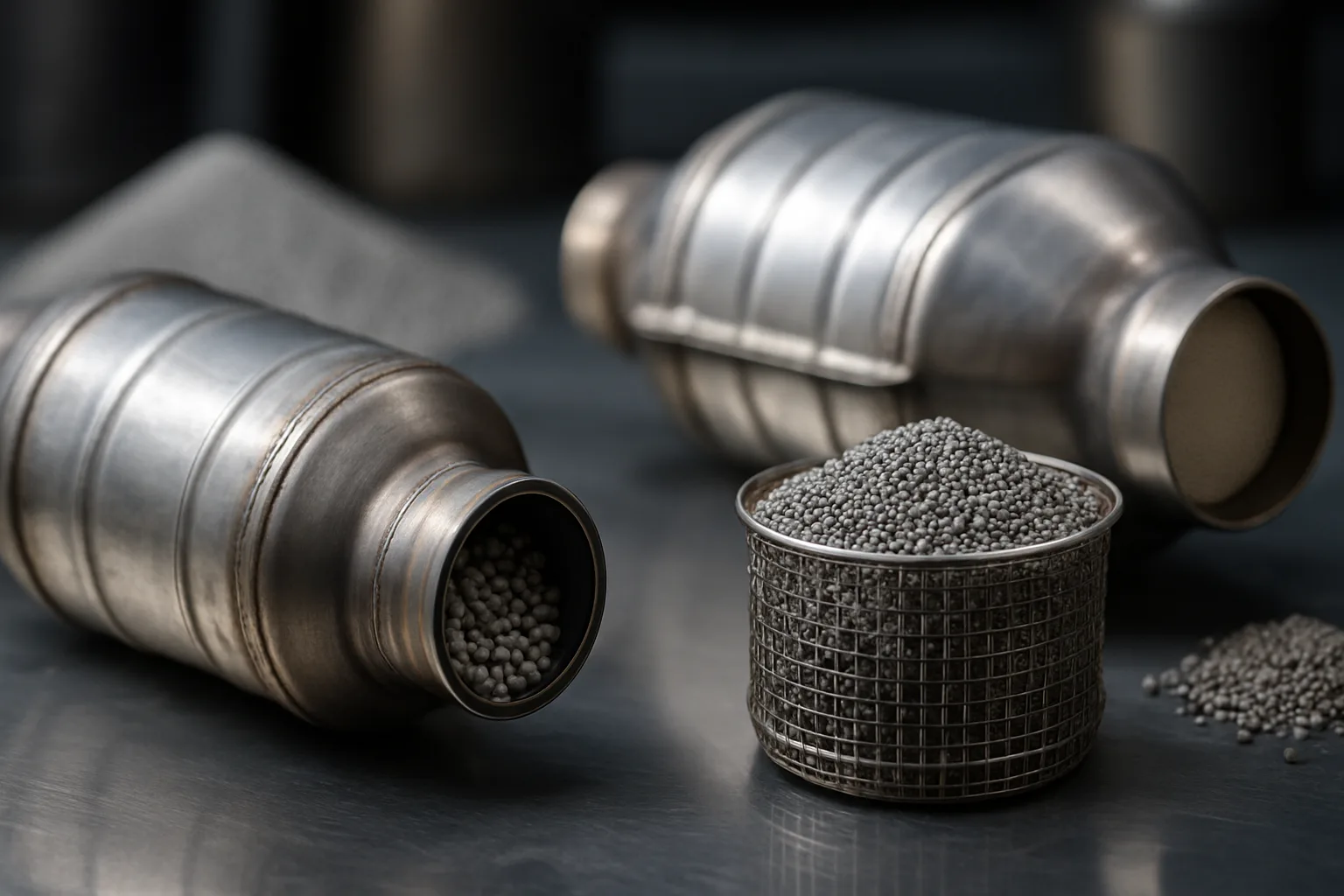
Foil vs. Bead Catalytic Converters: What's the Difference and What Are They Worth?
Most people selling scrap cats think a converter is a converter. Hand it over, take a check, done. But the type of converter you're holding — foil style or bead style — can meaningfully change what a catalytic converter buyer Indianapolis is willing to pay. If you don't know the difference, you're negotiating blind.
This week's market recap breaks down both converter types, explains why they're priced differently, and shows you how to stop guessing and start getting paid based on actual market data. Whether you run an auto shop in Indianapolis, pull cars at a salvage yard in Indiana, or you're just sitting on a pile of converters you pulled last month — this one's for you.
What Is a Foil-Style Catalytic Converter?
A foil-style catalytic converter uses a metallic substrate — thin corrugated foil made from a metal alloy — instead of a ceramic honeycomb. The precious metal catalyst (platinum, palladium, and rhodium) gets coated onto this metallic foil structure. The result is a converter with a denser, more tightly packed substrate that can handle higher exhaust temperatures.
You'll find foil-style converters most commonly in:
- High-performance and European vehicles (BMW, Mercedes, Audi, Porsche)
- Diesel applications where heat tolerance matters
- Certain OEM converters on trucks and commercial vehicles
- Some aftermarket sport catalysts
From a recycling standpoint, foil-style converters are processed differently than ceramic units. The metallic substrate requires a separate smelting process. Refiners need to account for that when they bid. A foil-style converter can't just be crushed and assayed the same way a ceramic honeycomb can — the base metal from the foil itself becomes part of the equation.
This matters for your bottom line. Some buyers discount foil-style converters because their processing costs are higher. Others pay a premium because the PGM (platinum group metal) loading in certain foil units is dense and recoverable. The key is finding a buyer who actually knows what they're looking at — not one who just applies a flat rate to every converter that walks through the door.
What Is a Bead-Style Catalytic Converter?
Bead-style converters use small ceramic or alumina beads as the substrate instead of a honeycomb structure. The precious metals are deposited onto the surface of these beads. The converter housing is filled with the bead material, which tumbles loosely inside the shell — you can sometimes hear it rattling when you shake the unit.
Bead-style converters were more common in older domestic vehicles from the 1970s and 1980s. If you're pulling older American iron — think classic GM trucks, early Ford F-Series, or Chrysler products from that era — there's a reasonable chance you're looking at a bead-style unit.
Here's what makes them interesting from a catalytic converter recycling Indianapolis perspective:
- The bead material is relatively easy to separate and sample
- PGM content tends to be lower than modern OEM converters — but not zero
- Older bead units have variable precious metal content depending on the manufacturer and model year
- Some specialty bead converters — particularly off-road and industrial units — carry heavier PGM loads
The trap that catches a lot of sellers is assuming bead-style means low value. That's not always true. The actual cat converter value depends on the PGM loading, the condition of the beads, and whether the substrate has been contaminated or degraded. A well-preserved bead unit from a light-use vehicle can outperform a burned-out ceramic converter from a high-mileage fleet truck.
Why Converter Type Affects Scrap Catalytic Converter Pricing
Precious metal content — platinum, palladium, and rhodium — is what drives converter value. But the substrate type determines how that content gets recovered and how expensive that recovery process is for the refiner. Refiners pass those costs back to buyers, and buyers pass them back to you in the form of lower bids.
The three main cost factors that differ between foil and bead units:
- Sampling complexity. Ceramic honeycomb converters can be crushed, blended, and sampled relatively easily. Foil and bead substrates require more handling and process time.
- Base metal interference. Foil units contain significant base metal that needs to be separated or accounted for in the assay. This affects the net PGM return.
- Volume and lot composition. Most refiners want to process converters in bulk. Mixing foil, bead, and ceramic in the same lot can complicate the assay and reduce confidence in the return values.
This is exactly why doing a proper catalytic converter scrap price lookup before you sell isn't optional — it's table stakes. If you don't know whether your unit is a foil, bead, or ceramic, and you don't know what the current spot prices for platinum, palladium, and rhodium are doing, you're walking into a negotiation with zero leverage. To check current catalytic converter prices before you sell, use a real-time lookup tool — not a six-month-old price list someone texted you.
How to Identify Which Type You Have — and Why It Matters in Indianapolis
You don't need a metallurgy degree to figure out converter type. Here's a practical field approach:
- Shake it. If you hear loose rattling, you likely have a bead-style unit.
- Cut it open (if you're processing cores). Ceramic honeycomb looks like a tightly packed grid. Foil looks like a rolled metallic mesh. Beads look like small pebbles or granules.
- Look up the VIN or part number. For OEM converters, a VIN lookup or serial number search will tell you the exact unit and its approximate PGM profile.
- Weigh it. Foil units tend to be heavier relative to their size than ceramic units. Bead units vary.
In Indianapolis and across Indiana, the mix of vehicles on the road skews heavily toward domestic trucks and SUVs — F-Series, Silverados, Ram trucks, plus a solid share of imports. That means the average scrap converter mix coming out of Indiana yards includes a range of OEM ceramic converters, some foil units from newer European makes, and the occasional older bead unit from vintage domestic vehicles. Knowing what you have before you call a buyer gives you a real edge.
Platforms like SMASH make this process more structured. Instead of calling one buyer and accepting whatever number they quote you, you can get competitive bids from vetted buyers who actually know the difference between a foil unit and a ceramic core. More competition means better price discovery — and that's true whether you're selling a single converter or a pallet of mixed units. You can sell your scrap metal on the SMASH marketplace and let the market tell you what your load is actually worth.
What Are Foil and Bead Converters Actually Worth Right Now?
Straight talk: we're not going to publish fake price tables. Platinum, palladium, and rhodium markets move constantly — rhodium in particular has seen dramatic swings over the past several years, and 2026 has been no exception. Any specific price figure published in a blog post is stale before the ink dries.
What we can tell you is the general value hierarchy you'll encounter in the current market:
- High-grade OEM ceramic converters (certain Toyota, Honda, and GM units) tend to command the strongest prices because of consistent, documented PGM loading.
- Foil-style converters from European makes can pay well, but only if your buyer understands how to process them. In the wrong hands, they get discounted unfairly.
- Bead-style converters are generally lower value per unit, but older industrial or off-road bead units can be exceptions.
- Aftermarket and direct-fit converters (non-OEM) typically have lower PGM content and pay accordingly — sometimes significantly less than OEM units of similar size.
The smart move is to document what you have — photos, part numbers, substrate type if you can identify it — and get multiple bids. Platforms like SMASH exist precisely because the single-buyer model consistently undervalues well-documented inventory. Get the best catalytic converter price today by putting your converters in front of real competition, not just whoever picks up the phone first.
If you want to go deeper on pricing methodology and how PGM markets affect your payout, read catalytic converter pricing guides that break down the full picture.
And if you're in the Indianapolis area and want to connect with buyers who understand the difference between foil, bead, and ceramic, Indianapolis scrap metal services can point you in the right direction for local options.
Disclaimer: Catalytic converter prices fluctuate daily based on platinum, palladium, and rhodium spot prices. Always check current market rates before selling. The value ranges discussed in this article are general guidance only and do not constitute a price guarantee.
Frequently Asked Questions
Q: How do I know if my catalytic converter is foil, bead, or ceramic style?
The easiest field test is to shake the converter — loose rattling usually indicates bead-style. For foil vs. ceramic, you'll need to either cut the unit open or look up the part number or VIN to identify the original equipment specification. Many catalytic converter buyers in Indianapolis can identify the type on sight if you bring it in.
Q: Are foil-style catalytic converters worth more than ceramic ones?
Not automatically. Value depends on PGM loading, not substrate type alone. Some foil units from European OEM applications carry strong precious metal content, while others are discounted due to higher processing costs. The key is finding a buyer who can accurately assess what's in the unit rather than applying a blanket rate.
Q: Where can I find a catalytic converter buyer in Indianapolis who knows the difference between converter types?
Look for buyers who ask questions about the converter type, condition, and origin before quoting a price — that's a sign they're actually assaying based on PGM content. Platforms that create competitive bidding among multiple vetted buyers tend to produce better outcomes than single-buyer transactions, especially for mixed or specialty loads.
Q: Does catalytic converter recycling in Indianapolis require any paperwork?
Indiana has regulations around the purchase and sale of catalytic converters to address metal theft. Sellers typically need to provide valid ID, and many buyers are required to document the transaction. If you're selling converters pulled from vehicles you own or service professionally, having documentation of the source (title, repair order, bill of sale) makes the transaction cleaner and can improve buyer confidence.
Q: Is it worth separating foil and bead converters from ceramic ones before selling?
Yes, in most cases. Buyers who process mixed lots may apply conservative pricing across the board to account for the variability. Sorting your inventory by type — and documenting each category — gives buyers more confidence and can result in stronger bids, particularly for specialty foil units that deserve their own evaluation.
If you've got foil units, bead converters, or a mixed pallet sitting in your yard, don't settle for a single quote. Get competitive bids, document your inventory, and let the market work in your favor. Get the best catalytic converter price today — a free quote takes minutes and costs you nothing.
Follow SMASH on LinkedIn for weekly scrap metal market updates, PGM price insights, and industry news that actually matters to yard operators and recyclers.