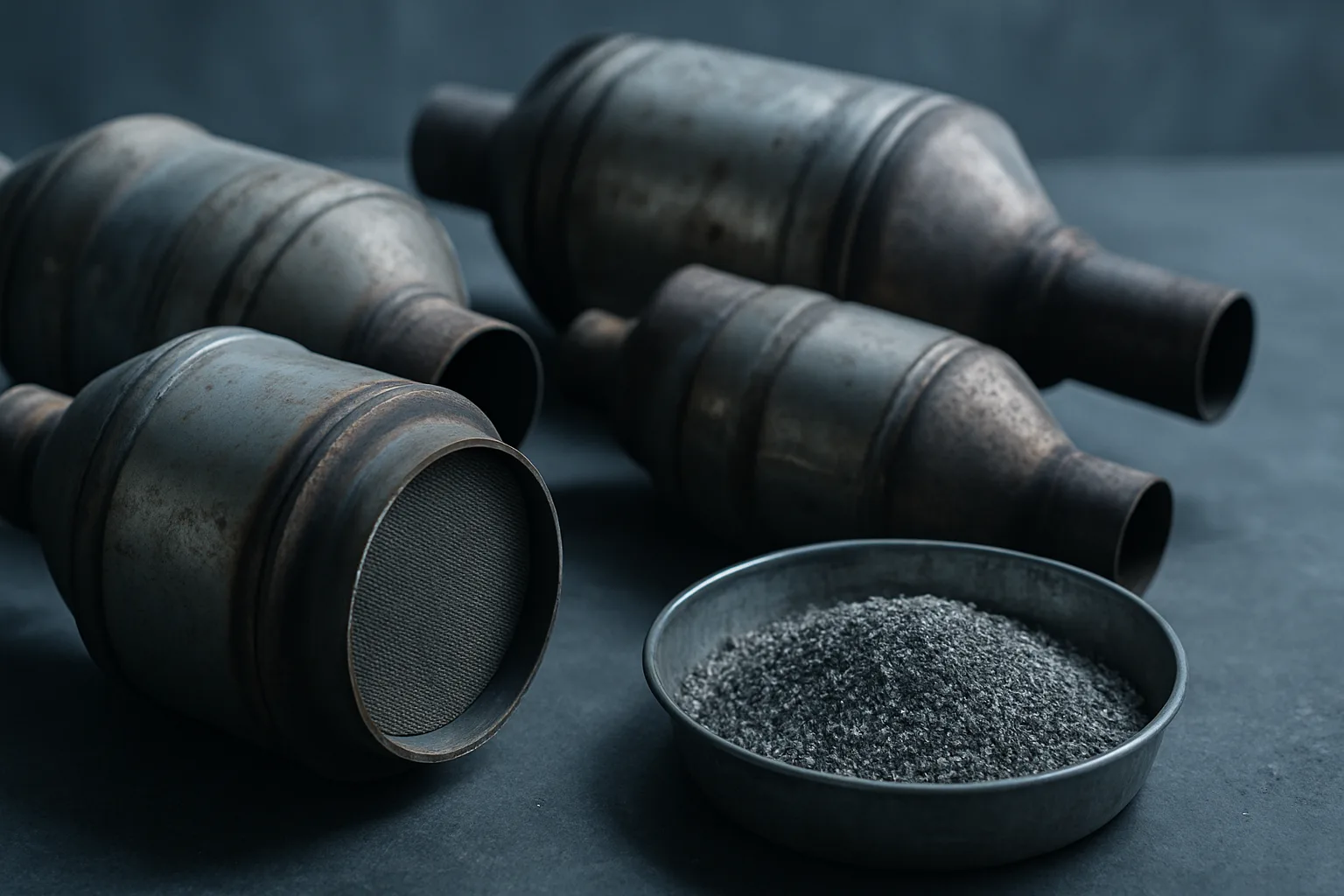
Why the Price You Get for a Scrap Cat Is Set Thousands of Miles Away
Most people selling a scrap catalytic converter think the price is set by the guy behind the counter at the local yard. It isn't. The number on that ticket traces back to trading floors in London, Zurich, and Tokyo — and to mining disruptions in South Africa, smelter shutdowns in Russia, and demand swings from auto manufacturers across three continents. If you're trying to get the best catalytic converter price in Nashville, you need to understand what's actually moving the market before you walk in the door.
This isn't theory. The platinum group metals (PGMs) locked inside every catalytic converter — platinum, palladium, and rhodium — are globally traded commodities. Their spot prices shift daily. That means the value of the cat sitting in your garage can be meaningfully different on a Tuesday than it was on the previous Friday. Timing matters. Knowing why it moves matters even more.
The Three Metals That Determine Your Cat's Value: Platinum, Palladium, and Rhodium
Every scrap catalytic converter contains a ceramic or metallic substrate coated with a precise blend of PGMs. The exact mix depends on the vehicle make, model, year, and engine type. A late-model domestic truck converter looks nothing like a small-displacement import cat on the inside — and the price gap between them can be substantial.
Here's what each metal does and why it matters to your payout:
- Platinum — Used heavily in diesel converters and some gasoline applications. Platinum prices respond to diesel vehicle demand, South African mining output (which dominates global supply), and industrial applications in hydrogen fuel cells and jewelry. As the auto industry continues its slow shift away from diesel in 2026, platinum demand from vehicle manufacturers has softened — but industrial demand has partially offset that.
- Palladium — The dominant PGM in gasoline-powered converters, which still make up the bulk of vehicles on the road in the U.S. Palladium is heavily sourced from Russia and South Africa. Supply disruptions — political, logistical, or otherwise — can send palladium spot prices swinging hard in either direction.
- Rhodium — The wild card. Rhodium is the rarest of the three and has historically been the most volatile. Checking the rhodium price today before you sell is non-negotiable if you have a high-grade converter. Rhodium can represent a disproportionate share of a single cat's total value, even when present in very small quantities. A high-rhodium OEM converter from a premium vehicle can be worth multiples of a budget aftermarket replacement.
The ratio of these metals — and how much of each survives in a used converter — is what separates a $40 cat from a $400 one. Assay results from smelters determine the final payout in the refining chain. Buyers who quote you a price are essentially making a bet on where those metals land after processing.
How Global Supply Shocks Hit Scrap Converter Prices at the Yard Level
Supply disruptions don't stay in the mining sector. They travel fast — from a South African mine strike or a Russian export restriction, up through the refining chain, and straight into the price your local Nashville yard is willing to pay for a scrap catalytic converter this week.
The mechanism works like this: when primary PGM supply tightens, refiners and recyclers compete harder for secondary supply — which means scrap converters. Yards that buy from auto shops, dismantlers, and collectors find themselves in a more competitive buying environment. That pressure, when it's working correctly, pushes prices up at the street level. When primary supply loosens or demand from automakers drops, the opposite happens.
In 2026, the market is navigating a few intersecting forces:
- The ongoing transition toward battery electric vehicles (BEVs) is gradually reducing long-term demand for PGMs in new vehicle production — but the existing ICE fleet on the road is enormous, and it keeps generating scrap converters for years.
- Hybrid vehicle growth has actually sustained palladium demand longer than some analysts predicted, since hybrids still use catalytic converters.
- Geopolitical uncertainty continues to create periodic supply volatility, particularly for palladium and rhodium.
- Currency fluctuations affect how U.S. buyers price against international benchmarks — which is why scrap metal markets in other countries, including scrap metal recycling markets in Canada and pricing benchmarks like a catalytic converter price list used in other regions, can influence domestic U.S. sentiment even if they don't directly set your local payout.
The bottom line: global markets create the ceiling and the floor. Local competition — or the lack of it — determines where you land within that range.
Why Local Competition in Nashville Determines Whether You Hit the Top of the Range
Understanding PGM spot prices is valuable. But knowing the spot price doesn't automatically mean you get paid close to it. That depends entirely on how many buyers are competing for your converter.
If you call one buyer, you get one number. That buyer has no incentive to sharpen their bid. They know you might just take it and leave. This is the old way — single buyer, one phone call, guessing whether you're leaving money on the table.
Nashville has a real scrap metal ecosystem. Tennessee's automotive history, with manufacturing facilities and a dense network of independent shops and dismantlers, means there's genuine volume moving through the market here. That volume attracts buyers. But volume doesn't help you if you're only talking to one of them.
This is where platforms like the SMASH scrap metal auction marketplace change the equation. Instead of one call to one buyer, you put your inventory in front of multiple vetted buyers. Competition happens. Price discovery happens. You stop guessing what your cats are worth and start finding out.
For sellers in Nashville moving any meaningful volume of scrap catalytic converters — whether you're an auto shop, a dismantler, or a collector sitting on a pile of cats — auction-style selling makes the global market work for you instead of against you. To learn more about Nashville scrap metal services and what's available in your area, it's worth exploring what a competitive process actually looks like for your specific inventory.
OEM vs. Aftermarket: Why the Grade of Your Converter Amplifies Market Moves
Not all scrap catalytic converters respond to precious metal price swings the same way. An OEM converter from a late-model full-size truck or a premium European sedan contains significantly more PGM loading than a low-grade aftermarket replacement. When rhodium or palladium prices spike, OEM high-grade cats can see dramatic value increases. Budget aftermarket cats barely move.
This is why proper identification before you sell is critical. A converter that looks beat-up on the outside might contain a high-value substrate on the inside. Buyers who have access to serial tracking, photo documentation, and accurate converter databases can identify what they're actually bidding on — and that confidence typically translates into stronger offers.
Key factors that affect grade and therefore value:
- Vehicle make and model — Certain manufacturers use higher PGM loadings by design.
- Engine size and emissions standard — Larger engines and stricter emissions certifications generally mean more catalyst.
- Age and mileage — PGM content depletes over time, but the rate varies. A high-grade OEM cat from a well-maintained vehicle often retains significant value.
- Physical condition — Melted, rattling, or drilled-out substrates reduce recoverable content and therefore reduce price.
- Aftermarket vs. OEM — This single distinction can represent a price difference of 50% or more on some units.
When global PGM prices are elevated, knowing exactly what you have becomes even more important. Selling an OEM high-grade cat at an aftermarket price is a real and common mistake. Platforms that support accurate identification protect you from that outcome. To get the best catalytic converter price today, documentation and identification aren't optional — they're the foundation of getting paid fairly.
How to Use Market Conditions to Time and Position Your Sale
You can't perfectly time precious metal markets — nobody can. But you can make informed decisions about when to sell and how to sell that improve your outcome regardless of where prices happen to land.
Practical steps that apply right now, in August 2026:
- Check PGM spot prices before you sell. Platinum, palladium, and the rhodium price today are publicly available. Knowing the direction of the market — even roughly — helps you assess whether a buyer's offer makes sense.
- Don't batch-sell without identifying your inventory. Sort your cats before you quote them. High-grade OEM converters should not go out at a blanket blended price if the spread between your best and worst units is significant.
- Use competitive selling. SMASH provides an auction format specifically for scrap metal loads, including catalytic converters. Vetted buyers compete. You see real offers. That's the structure that lets global price signals actually reach you instead of getting absorbed by a single buyer's margin.
- Document everything. Photos, serial numbers, vehicle source information where available. Documentation increases buyer confidence, which supports stronger bids. This matters whether you're selling five cats or five hundred.
- Sell regularly, not in panic or desperation. Holding inventory waiting for a market peak rarely works out. A consistent selling process with competitive pricing beats sporadic sales at unknown prices.
Tennessee sellers who build a disciplined approach — combining market awareness with competitive auction access — consistently outperform those relying on a single buyer relationship and a handshake price. You can read catalytic converter pricing guides to go deeper on specific grades, identification strategies, and what to expect from the selling process.
When you're ready to see what your inventory is actually worth, the right move is to check current catalytic converter prices and get a quote through a platform that puts multiple buyers to work for you. That's how you stop leaving money behind.
Disclaimer: Catalytic converter prices fluctuate based on daily precious metal spot prices, converter grade, and market conditions. Always verify current rates before selling.
Frequently Asked Questions
Q: Why does the rhodium price today matter so much for my scrap catalytic converter value?
Rhodium is the rarest and most price-volatile of the three platinum group metals found in catalytic converters. Even in small quantities, rhodium can represent a significant portion of a converter's total scrap value. Checking the rhodium spot price before you sell — especially if you have OEM converters from premium vehicles — can meaningfully change how you evaluate an offer.
Q: How do I know if I'm getting the best catalytic converter price in Nashville?
The only reliable way to know is to have multiple buyers compete for your inventory. A single quote from a single buyer gives you no reference point. Using a competitive auction platform like SMASH puts your inventory in front of vetted buyers and lets market forces set the price rather than one buyer's margin.
Q: Does it matter whether my converter is OEM or aftermarket when I sell it as scrap?
Yes — significantly. OEM converters from original vehicle manufacturers typically contain higher PGM loadings than aftermarket replacements. The price difference between a high-grade OEM cat and a budget aftermarket unit can be 50% or more. Proper identification before selling protects you from underpricing your best inventory.
Q: How often do scrap catalytic converter prices change?
Prices can shift daily, since they're tied to precious metal spot prices that trade continuously on global markets. Palladium and rhodium in particular can move sharply in short periods. If you're sitting on a meaningful quantity of converters, checking current pricing before you sell — not the price you were quoted last month — is essential.
Q: Can I sell scrap catalytic converters from Nashville in volume through an auction platform?
Yes. Platforms like SMASH are built for exactly this — yards, auto shops, dismantlers, and collectors who want to move catalytic converter inventory competitively rather than through a single-buyer arrangement. The process supports proper documentation, buyer vetting, and transparent pricing that reflects actual market conditions.
---If you're in Nashville or anywhere across Tennessee and you're tired of guessing what your cats are worth, the answer isn't a better phone call — it's a better process. Get the best price for your catalytic converter by letting buyers compete for it. Start with a free quote at best-catalytic-converter-price.com.
Follow SMASH on LinkedIn for ongoing scrap metal market updates, PGM price insights, and industry news that affects what your inventory is worth.