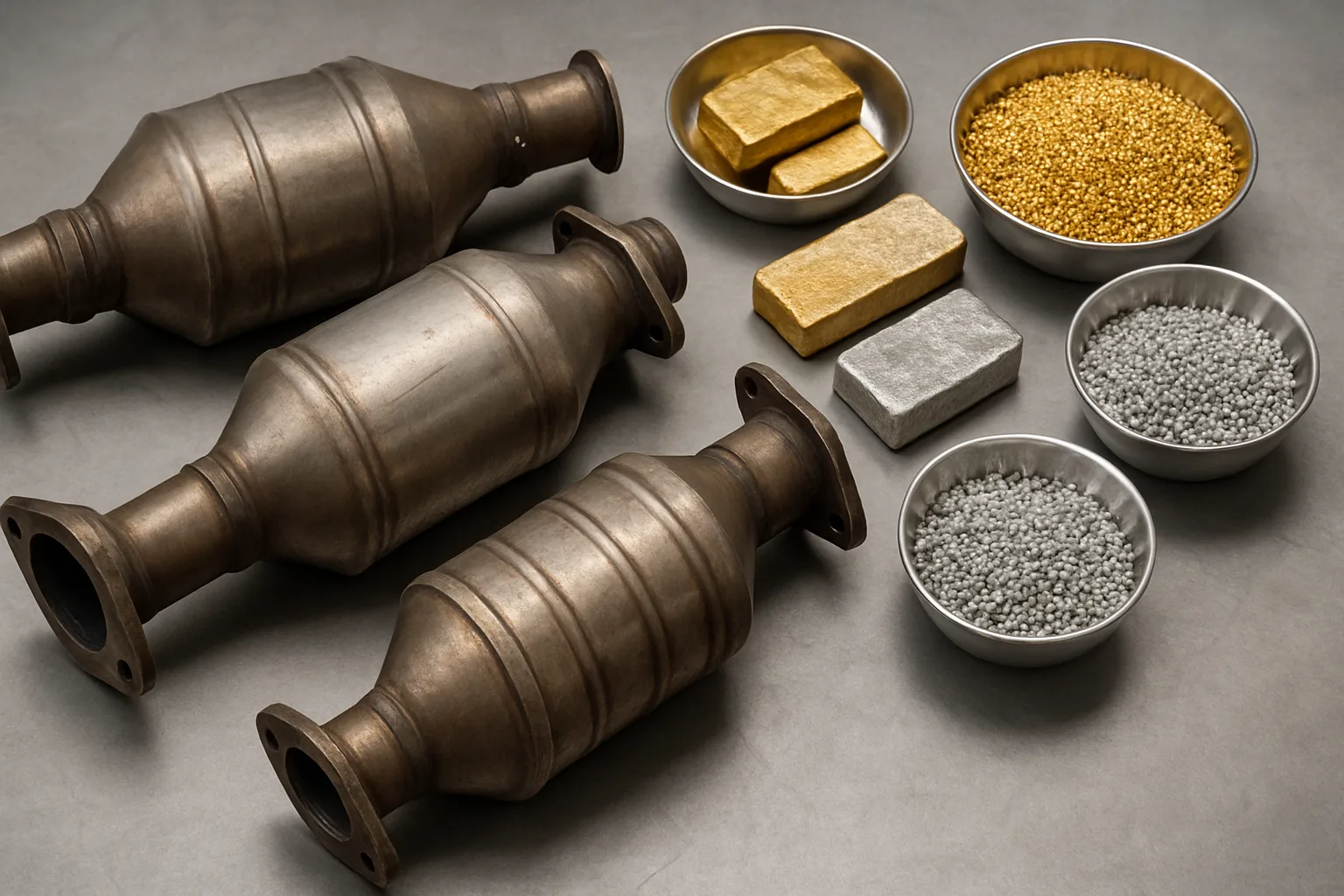
Most people think selling a scrap catalytic converter is just about the money. It is — but there's a bigger picture that most sellers in Kansas City never consider.
Catalytic converters contain platinum, palladium, and rhodium — three of the rarest metals on earth. When a converter ends up in a landfill or gets melted down improperly, those metals are lost forever. That's not just bad for your wallet. It's bad for the planet. Proper recycling keeps those materials in circulation, reduces the need for new mining, and cuts emissions across the supply chain. And here's the part worth knowing: doing it right actually gets you more money, not less.
This is the story of how responsible catalytic converter recycling works, why it matters environmentally, and how sellers across Missouri are starting to see the connection between transparency, competition, and doing right by the earth.
What's Actually Inside Your Catalytic Converter
Before you can understand the environmental stakes, you need to know what you're dealing with. A catalytic converter is a pollution control device — it converts harmful exhaust gases into less toxic compounds before they exit your vehicle. To do that job, it uses a ceramic or metallic substrate coated with precious metal catalysts.
Those metals are platinum (Pt), palladium (Pd), and rhodium (Rh). Mining them is extraordinarily destructive. Platinum and palladium mining in South Africa and Russia requires moving hundreds of tons of ore to produce a single ounce of usable metal. Rhodium is even rarer. The environmental cost of primary extraction — land disruption, water usage, energy consumption — is massive. Recycling a catalytic converter recovers those metals with a fraction of the environmental footprint.
- Platinum: Used in diesel converter substrates; recovery from scrap is significantly more energy-efficient than mining
- Palladium: The dominant metal in gasoline converters; global demand far exceeds new mining supply in most years
- Rhodium: The rarest and most volatile in price; a small amount in each converter carries serious recycling value
- Substrate materials: Ceramic and metalite cores also have recycling pathways that reduce industrial waste
When you get the best catalytic converter price today, you're not just cashing in — you're redirecting those metals back into a supply chain that doesn't require tearing up another mountain to get them.
The Environmental Case for Competitive Pricing — and Why It Matters in Kansas City
Here's something most sellers don't realize: the black market for stolen catalytic converters is driven almost entirely by undervalued legitimate markets. When scrap yards offer below-market rates and buyers hold information close to the chest, sellers have no reference point. They don't know if they're being paid fairly. That opacity creates the conditions where stolen converters can be laundered through informal channels — damaging communities, including neighborhoods right here in Kansas City.
Transparency is an environmental issue too. When legitimate recycling commands fair, competitive prices, more material flows into regulated channels. Certified processors use controlled smelting, proper emissions controls, and documented chain-of-custody tracking. The alternative — informal or illegal processing — often involves hazardous open burning or acid leaching that releases toxic compounds into soil and water.
Missouri has seen increased enforcement on converter theft and processing standards over the past several years. That regulatory pressure matters. But enforcement alone doesn't fix the incentive problem. Competitive, transparent pricing does. Sellers who can verify they're getting market value have every reason to use legitimate, environmentally responsible buyers. Sellers who can't verify that have a harder decision. Platforms like compare scrap metal bids from verified buyers to show sellers exactly where the market sits — and that visibility changes behavior.
How the Old Way of Selling Hurts Both Sellers and the Environment
The traditional scrap selling model works like this: you call one buyer, they quote you a number, you take it or leave it. You have no idea if that number reflects current catalytic converter prices today. You don't know what platinum is doing this week. You don't know if the buyer two hours away in St. Louis would pay 40% more for the same load of cats.
That information gap doesn't just cost sellers money. It creates friction in the recycling supply chain. When sellers feel undervalued, loads sit longer. Material gets shopped informally. Some of it ends up with processors who aren't operating under the same environmental standards as certified facilities. The problem compounds.
Consider what proper documentation and competitive buying looks like versus the old way:
- Old way: One phone call, one verbal quote, no paper trail, no price benchmark
- Old way: Seller accepts or walks — no visibility into whether the offer is fair
- Old way: Material moves to buyer with no photo documentation, no serial tracking
- SMASH way: Inventory documented with photos and serial tracking before the auction opens
- SMASH way: Multiple vetted buyers compete, creating real price discovery
- SMASH way: Auto-invoicing and BOL documentation create a clean chain of custody
- SMASH way: Material flows to a verified buyer operating within regulatory standards
That chain of custody matters environmentally. Documented loads are accountable loads. You can read catalytic converter pricing guides that break down exactly how documentation affects both your payout and the integrity of the recycling process.
Real Recycling Results: What Responsible Processing Actually Recovers
Let's get specific about what happens to a catalytic converter when it enters a legitimate recycling stream. After collection, converters are typically decanned — the outer shell is removed and the ceramic or metalite substrate is separated. That substrate gets crushed into a fine powder, which is then sampled and assayed to determine the precise concentration of platinum group metals (PGMs).
That assay result is what determines your cat converter value. A certified processor sends that powder to a smelter equipped with emission controls, gas scrubbers, and waste treatment systems. The metals are extracted, refined, and re-enter the market as usable PGMs — going into new automotive converters, electronics, jewelry, or industrial catalysts. The substrate material that remains after PGM extraction often goes through secondary processing as well, reducing what ends up as true waste.
Compare that to informal processing: open-air burning, acid baths in uncontrolled environments, or simple resale to unverified downstream buyers with no assay. The PGM recovery rate drops. Toxic byproducts aren't captured. The environmental benefit of recycling is partially or entirely negated. That's why who you sell to matters — not just for your payout, but for what actually happens to the material after it leaves your hands.
Sellers in Kansas City who use verified buyer networks are feeding into the first chain, not the second. That's worth something beyond the check.
How SMASH Connects Responsible Sellers to Verified Buyers
SMASH is a scrap metal auction platform built for yards and sellers who are done guessing. If you're sitting on a load of cats in Kansas City — whether it's a mixed batch of OEM converters pulled from domestic vehicles or a pallet of aftermarket units — SMASH puts your inventory in front of multiple vetted buyers at once.
The process is built around documentation from the start. You photograph your inventory, use VIN lookup and serial tracking where applicable, and build a verifiable record of what you're selling. That record is exactly what responsible downstream processors need to offer competitive bids. More information means more buyer confidence. More buyer confidence means stronger bids. That's not a promise of a specific number — but competition can help reveal the market, and documented inventory gives buyers more confidence than a verbal description and a handshake.
For sellers across Missouri dealing with mixed loads — everything from high-value foreign pre-cats to lower-grade domestic converters — the auction format creates real price discovery on each unit type. No subscription fees. SMASH only makes money when the seller does. That alignment matters. If you want to check current catalytic converter prices and understand where your material sits in the market, starting with a documented, competitive process is the right move.
For local sellers, Kansas City scrap metal services through platforms like SMASH make it straightforward to connect with buyers who are operating responsibly — and paying accordingly.
Why Catalytic Converter Recycling Prices Near You Reflect Global Pressures
Catalytic converter recycling prices near you aren't set locally. They're tied to London Metal Exchange (LME) spot prices for platinum, palladium, and rhodium — metals traded globally, influenced by automotive demand, industrial consumption, mining output, and geopolitical factors. When a mine in South Africa goes offline, rhodium prices can move hard within days. When EV adoption accelerates in a specific market segment, palladium demand projections shift.
This means catalytic converter prices today are a moving target. A converter that fetches one price in June might be worth meaningfully more or less in September. Sellers who wait for a "better time" without monitoring the market often miss windows. Sellers who move too fast without competitive bids leave money on the table. The answer isn't to time the market perfectly — it's to extract maximum value from current conditions through competition and documentation, whatever those conditions happen to be.
Local buyers in Kansas City set their offers based on where PGM spot prices sit, their processing costs, and what they believe the load will yield at assay. When you add competitive bidding, buyers have to sharpen their offers. That's the fundamental value of a scrap metal auction platform in a market this complex.
Disclaimer: Catalytic converter prices fluctuate daily based on precious metal spot markets. Always verify current rates before selling. The information in this article reflects general market dynamics as of August 2026 and is not a guarantee of specific pricing.
Frequently Asked Questions
Q: What are catalytic converter prices today in Kansas City?
Catalytic converter prices in Kansas City vary by converter type, vehicle make, and current platinum, palladium, and rhodium spot prices. OEM converters from foreign vehicles typically command higher prices than aftermarket or domestic units. Because PGM markets move daily, it's best to get competitive bids through a verified buyer platform rather than relying on a single quote. Always check current rates before selling.
Q: Why does proper recycling affect what I get paid for my catalytic converter?
Legitimate processors who operate certified facilities can accurately assay your converter's PGM content and bid based on real recovery data. Informal buyers who process outside regulated channels often lowball to cover their own risk. Documented inventory sold through competitive channels tends to attract more serious, higher-offering buyers — because they know exactly what they're getting.
Q: How do I find the best catalytic converter price in Missouri?
The best approach is to document your inventory thoroughly — photos, serial numbers, converter type — and put it in front of multiple vetted buyers at once. Platforms like SMASH use an auction format that creates real price competition among verified buyers. A single phone call to one local buyer rarely gets you market value.
Q: Are catalytic converter buyers in Missouri regulated?
Missouri has regulations governing the purchase of catalytic converters, including record-keeping requirements for buyers. Using vetted, documented channels protects sellers from legal exposure and ensures the material enters a legitimate recycling stream. Always confirm your buyer is operating in compliance with state requirements.
Q: Does where I sell my catalytic converter affect its environmental impact?
Yes, meaningfully. Certified downstream processors recover PGMs using controlled smelting with emission controls and waste treatment. Informal or unregulated processors often have lower recovery rates and release hazardous byproducts. Selling through verified channels doesn't just protect your payout — it ensures the environmental benefit of recycling is actually realized.
Proper recycling isn't just good citizenship — it's good business. If you have cats sitting in Kansas City, document them, get competitive bids, and make sure the material goes somewhere that handles it right. If you're ready to find out what your load is worth in today's market, get the best catalytic converter price today and start the process with a free quote at best-catalytic-converter-price.com.
Stay current on scrap metal markets and catalytic converter pricing trends — follow SMASH on LinkedIn for industry updates, PGM market insights, and practical recycling news that actually affects your bottom line.