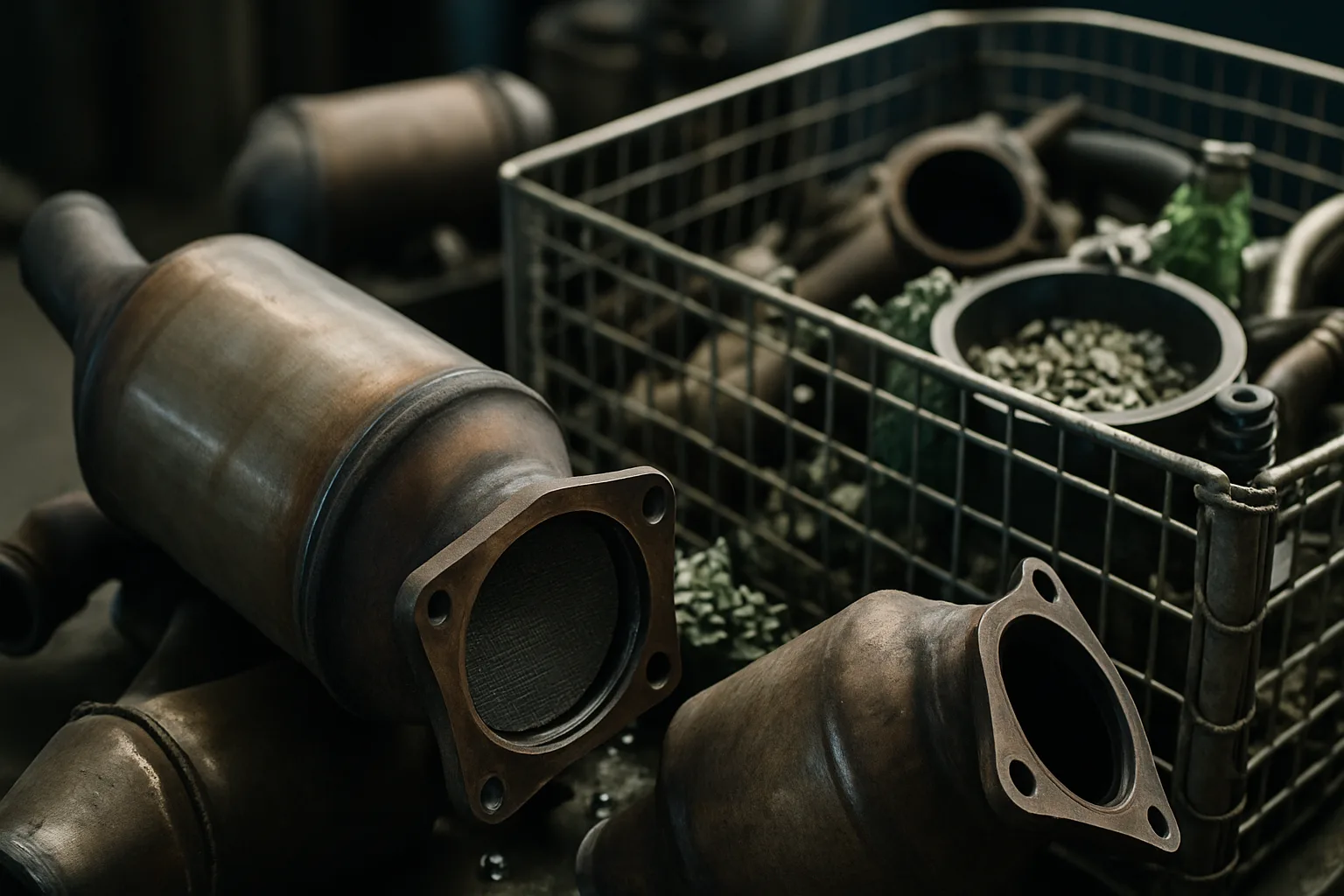
Every year, thousands of scrap collectors, auto shops, and individual sellers get ripped off selling catalytic converters. Not through theft — through bad deals they never saw coming.
The catalytic converter buying market has a scam problem. Fly-by-night buyers, rigged scales, vague verbal quotes, and disappearing cash offers are standard plays. If you're trying to sell catalytic converters online or in person without knowing what to watch for, you're walking into a market where some buyers profit from your confusion. This article breaks down the most common scams in the cat converter market — and how to protect yourself every time you sell.
Why the Catalytic Converter Market Attracts Scammers
Catalytic converters contain platinum, palladium, and rhodium — three of the most valuable metals on earth. A single OEM converter from a truck or SUV can carry significant recoverable value depending on the substrate loading and current metal prices. That value gap between what a seller accepts and what a buyer recovers is exactly where bad actors operate.
The problem gets worse because most sellers — including experienced recyclers in Worcester, Massachusetts — don't have easy access to assay results, live metal spot data, or refinery relationships. Buyers who do have that access use information asymmetry as a weapon. They lowball. They stall. They offer "cash today" at half the real market value and count on you not knowing the difference.
- Platinum, palladium, and rhodium prices fluctuate daily — and most sellers don't track them
- Cat converter grades vary wildly — a domestic cat and an OEM converter from a Prius are not the same product
- No standard pricing sheet exists — which gives shady buyers room to invent numbers
- Cash deals leave no paper trail — making disputes nearly impossible
The solution isn't to stop selling. It's to sell smarter — with documentation, competition, and verified buyers. That's where platforms like smashscrap.com change the equation entirely.
The Most Common Scams When You Sell Catalytic Converters Online or In Person
These aren't rare edge cases. Talk to any high-volume recycler in Massachusetts and you'll hear versions of all of these.
1. The Bait-and-Switch Quote
A buyer gives you a strong verbal quote over the phone or online. You drive across town — or ship your load — and suddenly the price drops. The excuse is always vague: "These aren't grading out like we expected," or "Platinum dropped this morning." Without a written, binding quote tied to a specific lot and grading standard, you have no recourse. You're stuck accepting the new number or eating the cost of getting your cats back.
2. Misgrading Your Converters
Catalytic converters are typically graded into categories — domestic cats, foreign small, foreign large, high-grade OEM, and so on. Each grade has a different value per unit. A dishonest buyer deliberately grades your high-value OEM converters as lower-tier domestic cats. The difference can be significant per unit. Without photo documentation and serial tracking, you can't challenge a grading decision after the fact.
3. Short-Weighting
For buyers purchasing cats by weight rather than unit, scale manipulation is a real risk. Uncertified scales, pre-loaded tare weights, or simply telling you the scale "rounds down" are all in play. This is especially common in informal cash transactions. Always ask for certified scale tickets — and if a buyer won't provide them, that's your answer.
4. The Disappearing Online Buyer
You find a buyer online who offers above-market rates, asks you to ship your converters, and promises payment on receipt. The cats arrive. Payment never does. Online marketplaces with no buyer vetting make this trivially easy to execute. This scam hits individual sellers and small shops the hardest — people who can't absorb the loss of a full load.
5. "Cash Today" Pressure Tactics
A buyer shows up at your yard or contacts you with urgency: take this price right now or the offer disappears. This is a pressure tactic designed to prevent you from shopping the load to other buyers. Legitimate buyers don't need you to skip due diligence. If someone is pushing you to decide before you can get a second quote, walk away.
6. Vague or Missing Documentation
No bill of lading. No itemized packing list. No written confirmation of grade or unit count. Some buyers deliberately keep transactions undocumented so they can dispute counts and grades after the fact — or so there's no record if a dispute goes sideways. Documentation protects you. A buyer who refuses to provide it is not a buyer you want.
How to Protect Yourself: Practical Steps Before Every Sale
Protecting yourself doesn't require a law degree. It requires process. Build these habits into every transaction and you make the most common scams nearly impossible to execute against you.
- Document everything before it leaves your hands. Photograph every converter individually. Record serial numbers where visible. Count units and record the count. Scrap metal inventory management isn't just good business — it's your legal protection if a dispute arises.
- Get quotes in writing. A verbal number is not a quote. It's a conversation. Any serious buyer will put an offer in writing tied to specific grading criteria. If they won't, don't ship.
- Check spot prices before you accept any offer. You don't need to be a metals trader. Just know roughly where platinum, palladium, and rhodium are trading so you can sanity-check an offer. If a buyer quotes you far below what the recoverable PGM content would suggest, ask why.
- Use vetted platforms. Selling through a platform that vets buyers — rather than a random online listing or a cold caller — eliminates an entire class of scams. Platforms like SMASH connect sellers with verified, accountable buyers and create a transaction record both sides can stand behind.
- Never accept pressure to skip the process. Urgency is a scam tool. Take the time you need. A legitimate buyer will still be there tomorrow.
- Request certified scale tickets for any weight-based purchase. No exceptions. A buyer who balks at this is telling you something important.
Sellers in Worcester and across Massachusetts who build these steps into their process find that the predatory buyers lose interest quickly — they're looking for easier targets, not sellers who know the game.
How Competitive Auctions and Transparent Platforms Eliminate the Scam Environment
The reason most catalytic converter scams work is the same reason they've always worked: sellers negotiate with one buyer at a time, in private, with no market benchmark. That's a negotiation structure designed to benefit the buyer — not you.
Competitive auction formats flip that dynamic. When multiple vetted buyers bid on the same documented load, you don't have to wonder if you're leaving money on the table. The market tells you what your cats are worth. No guessing. No trusting someone who profits from your uncertainty.
SMASH runs exactly this kind of format. Your load gets documented with photos and unit counts, listed to a network of verified buyers, and sold through a competitive process. Auto-invoicing and transaction records mean nothing disappears after the sale. That's not a pitch — it's just how transparent markets work. If you want to get the best catalytic converter price today, competing buyers are the mechanism that gets you there.
For context on how these platforms handle documentation, grading, and buyer verification, read catalytic converter pricing guides that walk through the full transaction process step by step.
Red Flags to Watch for When You Sell Catalytic Converters Online
Not every bad buyer announces themselves. Some operate professionally until the moment they don't. Here are the specific signals that should stop a transaction before it starts:
- No verifiable business address or license
- Refuses to provide written quotes or purchase confirmations
- Offers significantly above market rate with no explanation
- Requests shipment before payment or escrow arrangement
- Cannot provide references from other sellers
- Pushes urgency or "today only" pricing
- Won't discuss their assay or grading methodology
- Asks you to waive documentation requirements
Any single one of these is worth pausing for. Multiple flags together means you move on entirely. Your cats have real value — platinum palladium rhodium content doesn't disappear because a buyer gave you a confident handshake. Document your inventory, demand transparency, and sell through channels where buyers compete for your business. You can check current catalytic converter prices to establish a baseline before you engage any buyer.
The Bottom Line for Sellers in Worcester and Beyond
The cat converter market is not going to police itself. Bad buyers exist because sellers let transactions happen in the dark — no documentation, no competition, no record. You can change that on your end right now, regardless of your volume or experience level.
Whether you're a one-person operation in Worcester pulling a handful of cats a month, or a mid-size recycling yard in Massachusetts moving mixed loads every week, the same principles apply: document everything, demand written quotes, track your PGM market context, and sell through platforms where buyers are vetted and accountable.
SMASH was built for exactly this kind of seller — the one who's tired of guessing and ready to let competition do the work. If you're done leaving money on the table and done trusting buyers who benefit from your uncertainty, the process of getting a fair price is simpler than you think. Get the best price for your catalytic converter — start with a free quote at best-catalytic-converter-price.com and find out what your load is actually worth in a transparent, competitive market.
Disclaimer: Catalytic converter scrap prices and platinum, palladium, and rhodium spot prices fluctuate daily based on market conditions. Always verify current rates before finalizing any sale.
Frequently Asked Questions
Q: How do I safely sell catalytic converters online without getting scammed?
Use platforms that vet buyers before allowing them to participate in transactions. Document your inventory with photos and unit counts before shipping anything. Never send cats to a buyer who won't provide written purchase confirmation and a verifiable business identity.
Q: How do I know if I'm getting a fair catalytic converter scrap price?
Check current platinum, palladium, and rhodium spot prices to establish a rough baseline for PGM content in your load. Then get multiple quotes — ideally through a competitive auction format — rather than accepting the first number you hear. A single buyer has every incentive to quote low; competing buyers don't.
Q: Is it legal to sell catalytic converters in Massachusetts?
Yes, selling scrap catalytic converters is legal in Massachusetts with proper documentation. State regulations typically require sellers to provide identification and maintain transaction records. Always check current Massachusetts scrap metal dealer regulations, as compliance requirements can change.
Q: What should I document before selling my catalytic converters?
Photograph every converter individually, record any visible serial numbers, count your units, and note the grade of each converter if you can identify it. A detailed packing list and photo record protects you if a buyer disputes the count or grade after receiving the load.
Q: Are there scrap cat buyers I can trust in Worcester?
Worcester has legitimate scrap buyers, but even reputable local buyers benefit from you understanding market rates before you walk in. Use a platform that creates a documented, competitive transaction rather than relying solely on a single local relationship. Competition reveals the real market — local connections can still be part of that mix.
Follow SMASH on LinkedIn for weekly scrap metal market updates, industry news, and catalytic converter pricing insights delivered to your feed.