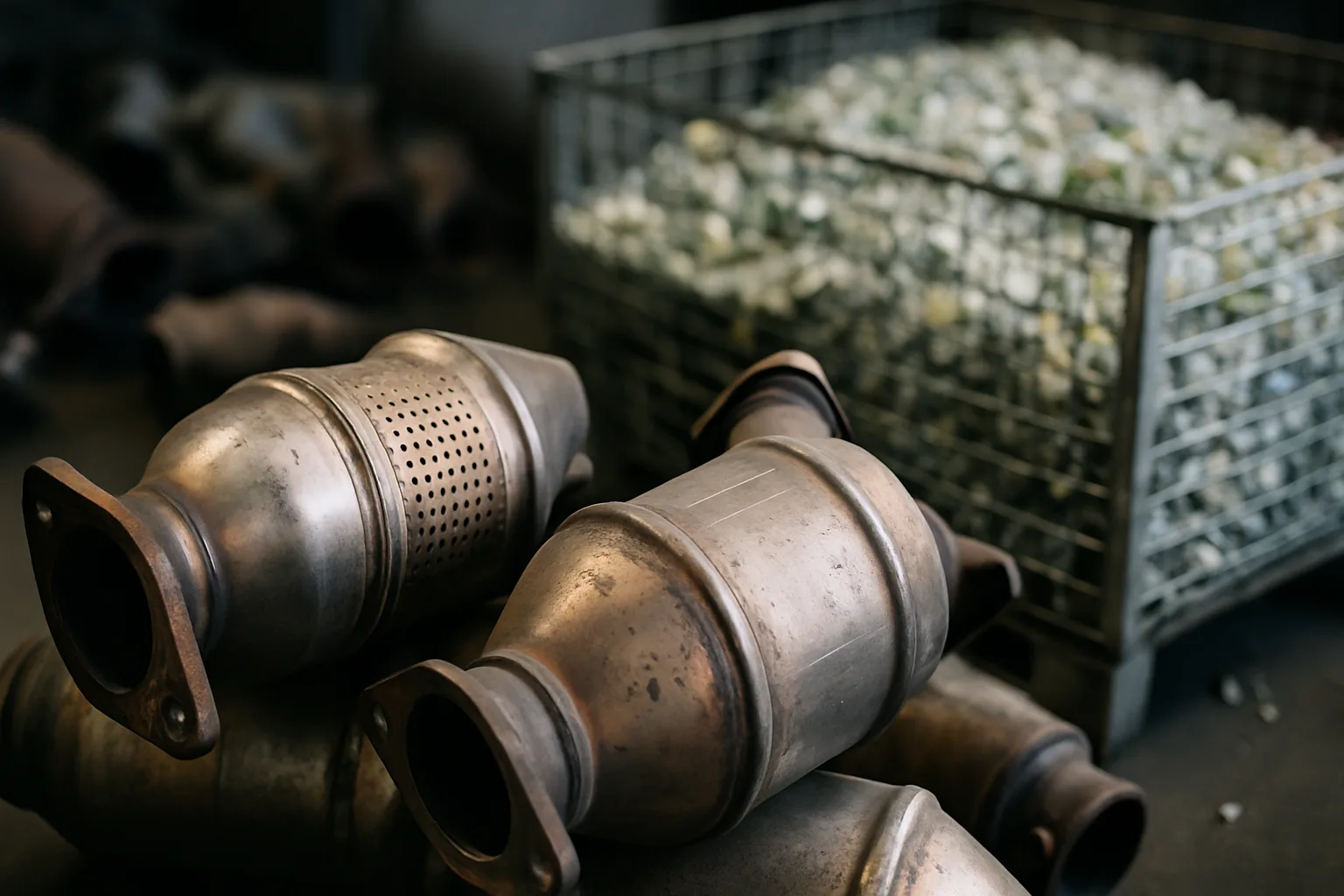
How Catalytic Converter Theft Is Quietly Killing Legitimate Scrap Values — And What It Means for Your Cat Converter Prices in Long Beach
Catalytic converter theft cost American vehicle owners and insurers an estimated billions of dollars in recent years — and the damage doesn't stop at the crime scene. Every stolen cat that moves through the grey market puts downward pressure on legitimate recyclers, complicates buyer relationships, and muddies the catalytic converter scrap value that honest sellers depend on. If you're trying to get fair cat converter prices in Long Beach, understanding this problem isn't just interesting background. It directly affects what you get paid.
This isn't a feel-good awareness piece. It's a hard look at how theft distorts the market, what California has done about it, and how transparent platforms are helping legitimate sellers fight back — starting with better documentation and real competition.
The Stolen Cat Supply Chain — How It Distorts Scrap Metal Prices Today
Stolen catalytic converters don't disappear. They get sold — fast, cheap, and without paperwork. That's the core of the problem. When stolen units flood into the secondary market at below-market rates, it creates artificial price pressure that legitimate sellers feel directly. Buyers who quietly absorb stolen material can afford to low-ball honest sellers. Why pay fair market if you're already supplementing volume through cheaper, dirtier channels?
The platinum, palladium, and rhodium inside a catalytic converter are the reason these parts get stolen in the first place. These platinum group metals (PGMs) are genuinely valuable — rhodium alone has traded at prices that make it one of the most expensive metals on the planet by weight. Palladium and platinum aren't far behind. That's not going to change. Which means the theft incentive isn't going away either, unless the market closes the doors that make stolen material easy to move.
Here's the chain that damages legitimate scrap metal prices today:
- Stolen units enter the market undocumented — no VIN tie, no seller ID, no serial tracking.
- Unscrupulous buyers pay cash, no questions — keeping their cost basis artificially low.
- Those buyers quote tighter margins to legitimate sellers — using stolen-subsidized pricing as leverage.
- Honest recyclers and auto shops get squeezed — told the price "is what it is" with no transparency into how that number was reached.
The result: legitimate sellers in markets like Long Beach, California end up subsidizing the theft problem by accepting lower prices than the PGM content actually justifies.
California's Legislative Response — And Why It Matters for Long Beach Sellers
California has been one of the more aggressive states in targeting catalytic converter theft at the transaction level. Legislation passed in recent years requires recyclers and scrap dealers to collect seller identification, document the source of the converter, and in many cases hold units before payment clears. The intent is to make it harder to quickly liquidate stolen parts without a paper trail.
For legitimate sellers in Long Beach and across California, these regulations are a double-edged sword. On the positive side, stricter documentation requirements push bad actors out of compliant yards. That's a real benefit — it reduces the grey-market supply that was suppressing your price. On the frustrating side, extra compliance steps can slow down transactions and create friction for small operators, auto shops, or individuals who just want to move a load of legitimate cores without jumping through hoops.
The practical takeaway: documentation that used to feel like a burden is now your proof of legitimacy. Sellers who can show clean sourcing — vehicle of origin, VIN where applicable, photos of the units — are in a stronger position with serious buyers. If you're sitting on a load of legitimate converters from fleet work, end-of-life vehicles, or routine shop turnover, your paper trail is a competitive asset. Use it.
If you want to understand how documentation affects your payout, read catalytic converter pricing guides that break down how buyer confidence connects directly to the offers you receive.
What Theft Pressure Means for Catalytic Converter Scrap Value Right Now
The PGM market in 2026 continues to reflect both industrial demand and supply-side uncertainty. Rhodium, palladium, and platinum values shift based on automotive production volumes, mining output from South Africa and Russia, and shifts in EV adoption rates. None of that is in your control. What is in your control is how your load gets presented — and whether you're selling into a competitive process or accepting the first number a single buyer offers.
Theft pressure matters here because it muddies price benchmarks. When buyers can't clearly separate stolen volume from legitimate volume, some respond by discounting everything — pricing conservatively to protect themselves from compliance risk. That means honest sellers wear a discount they didn't earn. The fix is transparency. Documented loads, with photos, source info, and proper identification, remove the ambiguity that gives buyers an excuse to low-ball.
The question how much is my catalytic converter worth doesn't have a single clean answer — it depends on the specific unit, the PGM content, the buyer pool, and market conditions on the day of sale. Using a how much is my catalytic converter worth calculator free tool gives you a starting point, but real price discovery happens when multiple buyers compete for your load. That's where the numbers get honest.
To check current catalytic converter prices and get a realistic sense of what your material is worth right now, start with verified pricing tools before you pick up the phone.
Yards, Buyers, and the Compliance Gap — Choosing Where You Sell in Long Beach
Not every buyer in the Long Beach area operates the same way. Some are fully compliant with California's transaction recording requirements. Others — fewer than before, but still present — operate with loose documentation practices that benefit them more than you. Knowing the difference matters for two reasons: legal exposure and price transparency.
If you sell to a yard that isn't properly documenting your transaction and that material later gets flagged, you may face questions you don't want to answer. Beyond the legal risk, under-the-table buyers don't compete on price — they compete on speed and convenience. That's a trade-off that costs you money. A fast cash transaction with no paperwork might feel efficient, but it's rarely the highest offer you could have gotten.
When evaluating where to sell in Long Beach or anywhere in California, look for:
- Documented transactions with clear records of unit identification and seller info
- Photo documentation processes — buyers who want to see the units before bidding are buyers who are serious
- VIN lookup or serial tracking where applicable — especially for OEM converter stock tied to specific vehicles
- Competitive pricing processes — not a single take-it-or-leave-it number, but a process that exposes your material to multiple buyers
- Auto-invoicing and BOL handling — the administrative side matters for shops and yards moving regular volume
If a buyer mentioned locally — say, Brown's Aluminum & Catalytic Converter Scrap Yard or any other regional buyer — doesn't tick those boxes, compare before you commit. One phone call to one buyer is not a pricing strategy.
How Transparent Platforms Help Legitimate Sellers Recover Lost Ground
The answer to a theft-distorted market isn't to accept lower prices — it's to sell smarter. That means getting your documented, legitimate inventory in front of multiple vetted buyers who are competing against each other on price. That's what platforms like North America's B2B scrap metal auction platform, SMASH, are built to do.
SMASH brings structure to a market that has traditionally rewarded opacity. When you list a load of catalytic converters — documented, photographed, with source information attached — vetted buyers can see exactly what they're bidding on. That confidence translates into better offers. Buyers competing in a transparent auction don't need to price in a theft risk discount when the documentation removes the ambiguity. More competition, cleaner information, better price discovery. That's the mechanic.
There are no subscription fees. SMASH only wins when you win. For sellers in Long Beach trying to recover fair value on legitimate cat stock in a market that's been suppressed by theft-driven grey inventory, that alignment matters. The inventory tool, photo documentation workflow, VIN lookup, and serial tracking aren't just compliance features — they're the tools that separate your load from the undocumented grey-market material that's been dragging prices down.
If you're moving volume regularly — whether you're a shop, a fleet operator, or a recycling yard — get the best catalytic converter price today by selling through a process built for legitimate material.
Frequently Asked Questions
Q: Does catalytic converter theft actually affect what I get paid as a legitimate seller in Long Beach?
Yes, directly. When stolen units enter the market at below-market rates, some buyers use grey-market pricing as a baseline. Legitimate sellers end up competing against that artificial floor. The best protection is documentation — it signals clean sourcing and gives buyers less reason to discount your material.
Q: What are cat converter prices in Long Beach based on right now?
Prices are driven by the platinum, palladium, and rhodium content in the specific unit — not a flat rate per converter. OEM converters from certain vehicles carry significantly more PGM content than aftermarket units. Local market conditions, buyer demand, and current PGM spot prices all factor in. Use a pricing calculator as a starting point, but real value comes from competitive bidding.
Q: How do I know if a local scrap yard in Long Beach is compliant with California's catalytic converter laws?
Ask directly whether they record seller identification, document the source of units, and provide proper receipts. California requires licensed recyclers and scrap dealers to maintain transaction records. If a buyer is reluctant to document your sale, that's a red flag — for both legal and pricing reasons.
Q: What is the catalytic converter scrap value of a stolen versus legitimate unit to a buyer?
The PGM content is the same — but the legal and compliance risk attached to a stolen unit is not. Compliant buyers discount heavily for undocumented material. That's why documented, legitimate loads should command better prices from serious buyers, especially on competitive platforms where buyers are vetted and accountable.
Q: Can I use a free calculator to find out how much my catalytic converter is worth before selling?
A free calculator gives you a PGM-based estimate using the make, model, and serial number of your converter. It's a useful benchmark, but it reflects spot prices on a given day and doesn't account for local buyer demand or the competitive premium you can generate by selling through an auction format. Use it to set expectations, then sell into competition.
Theft has made this market harder to navigate — but it hasn't made your legitimate material less valuable. The PGMs inside your catalytic converters are still worth what they're worth. The key is selling through a process that proves your material is clean and forces buyers to compete for it. If you're in Long Beach or anywhere in California and want to stop leaving money on the table, get the best catalytic converter price today with a free quote at best-catalytic-converter-price.com.
Disclaimer: Catalytic converter prices fluctuate based on PGM spot prices and market conditions. Check current rates before selling.
Follow SMASH on LinkedIn for ongoing scrap metal market insights, PGM price updates, and industry news that affects what your material is worth.