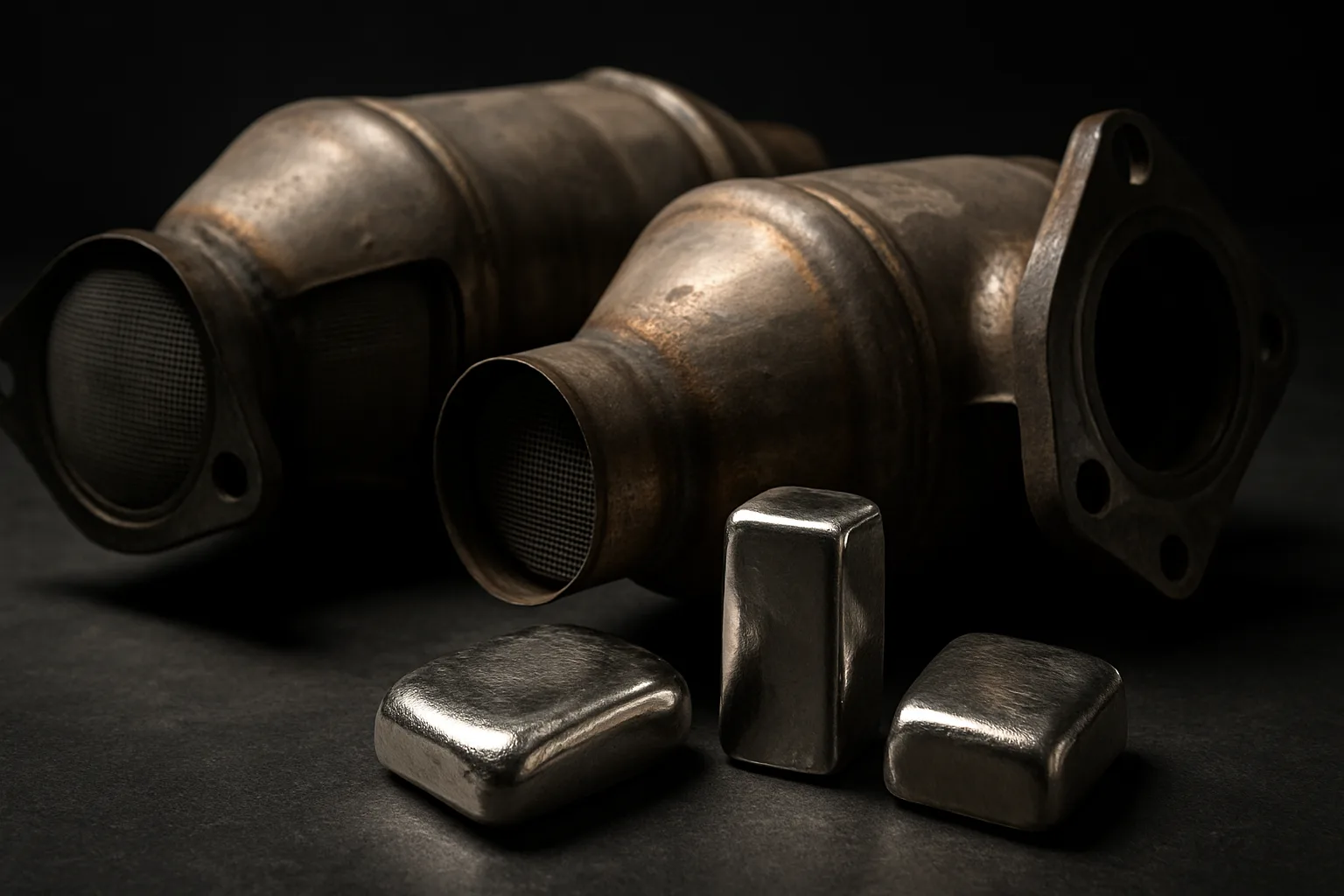
Most people selling a scrap catalytic converter have no idea what's actually inside it — and that ignorance is costing them money. The small ceramic brick packed into your cat converter contains platinum, palladium, and rhodium. These are some of the most valuable metals on earth, and their prices swing dramatically based on global supply chains, automotive demand, and mining output. If you're in Madison, Wisconsin looking to sell a converter, understanding what's inside changes everything about how you approach the sale.
This isn't a chemistry lecture. It's a practical breakdown of what drives the best catalytic converter price Madison sellers can realistically get — and how to stop leaving money on the table.
What's Actually Inside a Catalytic Converter?
Strip away the steel shell and you find a honeycomb substrate — either ceramic or metallic — coated with a washcoat that holds the precious metals. That washcoat is where the value lives. The three metals doing the work are platinum (Pt), palladium (Pd), and rhodium (Rh). Not every converter uses all three. The mix depends on the vehicle make, model, engine type, and which country it was engineered for.
Here's the basic role each metal plays inside the converter:
- Platinum: Oxidizes carbon monoxide and unburned hydrocarbons into CO₂ and water. Common in diesel converters and older gasoline designs.
- Palladium: Similar oxidation function, but performs better at high temperatures. Dominant in modern gasoline converters, especially post-2010 designs.
- Rhodium: Handles nitrogen oxide reduction — converting harmful NOx gases into nitrogen and oxygen. Used in smaller amounts but often the highest-value metal by weight in a converter.
The actual loading — how many grams of each metal are deposited on the substrate — varies significantly. A high-end OEM converter from a luxury or performance vehicle might carry several grams of platinum group metals (PGMs) total. A cheap aftermarket unit might have a fraction of that. This is why two converters that look identical from the outside can be worth dramatically different amounts at the recycling yard.
Rhodium Price Today: Why One Metal Can Make or Break Your Sale
Rhodium is the wild card. It's mined almost exclusively as a byproduct of platinum mining in South Africa, which means supply is extremely tight and doesn't respond quickly to demand. When automotive production ramps up, rhodium demand spikes — and prices follow. When the auto sector slows, rhodium can crash just as hard.
The rhodium price today (and by extension, palladium and platinum) directly determines what a recycler will pay you for your converter. Buyers don't guess. They use assay data, published PGM spot prices, and databases that correlate converter serial numbers to known PGM loading averages. If you walk in without knowing the rhodium price that day, you're negotiating blind.
This is why checking current market conditions before you sell matters. Even a one-day delay when prices are moving can shift your payout. For Madison sellers, that means doing your research before you drive to any buyer — not after. You can check current catalytic converter prices before you commit to any deal.
How Much Is My Catalytic Converter Worth by Serial Number?
This is the question that separates informed sellers from everyone else. Every OEM catalytic converter has a serial number, part number, or manufacturer code stamped on the shell. Buyers use this to look up the converter's known PGM content — the approximate grams of platinum, palladium, and rhodium loaded into that specific unit during manufacturing.
The lookup process works like this:
- Find the serial number or part number stamped on the converter shell.
- Cross-reference it against a converter database or pricing tool.
- Get an estimated PGM yield, then apply current spot prices for each metal.
- Factor in the processor's refining margin and smelting costs to get your net payout.
Platforms like SMASH use serial tracking and photo documentation to bring this transparency directly into the selling process. Instead of taking one buyer's word for what your converter is worth, you get competitive bids from vetted buyers who see the same information. That's how how much is my catalytic converter worth by serial number stops being a guessing game and becomes a data-driven number. Compare scrap metal bids from verified buyers and see what competition does to your bottom line.
Aftermarket converters are trickier. They often lack useful serial numbers, and their PGM loading tends to be lower and less consistent than OEM units. If you're holding a mix of OEM and aftermarket cats, sort them before you sell. Buyers price them differently, and bundling them together can drag down your average payout.
OEM vs. Aftermarket: The Price Difference Is Bigger Than You Think
OEM (original equipment manufacturer) converters are installed at the factory. They meet strict emissions standards and carry a predictable, documented PGM load. Aftermarket converters are replacements sold through parts suppliers — they meet legal emissions requirements but often use less precious metal to hit a lower price point.
The scrap value difference between OEM and aftermarket can be significant:
- OEM converters from domestic trucks, SUVs, and performance vehicles tend to carry higher PGM loads and command stronger prices from recyclers.
- OEM converters from imported vehicles (Honda, Toyota, BMW, etc.) vary widely — some are high-value, some are mid-range. Serial number lookup is critical here.
- Aftermarket converters (often called "foil cats" or "direct-fit replacements") generally have lower PGM content and lower scrap value. Don't expect OEM pricing on aftermarket units.
- DPF (diesel particulate filters) are a separate category. They contain platinum and can be valuable, but they're priced differently from standard three-way converters.
For Wisconsin yards and individual sellers in Madison, knowing which category your converters fall into before you call a buyer saves time and prevents the disappointment of expecting top dollar on a load that doesn't warrant it. If you're unsure, photo documentation and serial numbers are your best tools. Read catalytic converter pricing guides to get a clearer picture of how each type is valued.
Finding Catalytic Converter Buyers Near Me Open Now — and Why One Buyer Is Never Enough
If you're Googling catalytic converter buyers near me open now, you're doing the right thing — but don't stop at the first result. The scrap converter market is competitive, and buyers know that most sellers don't shop around. That single-call approach is exactly how yards and collectors end up underselling loads they spent real time accumulating.
Madison has active scrap infrastructure. Wisconsin's industrial and agricultural economy means there's consistent converter flow through the region — which also means local buyers are experienced and expect volume. But experienced buyers also know how to price to their advantage when a seller comes in uninformed.
The solution isn't to call five buyers one at a time. That's slow, inconsistent, and still leaves you relying on verbal quotes that can shift by the time you show up. The smarter move is to create real competition using a platform designed for it. SMASH puts your documented inventory in front of multiple vetted buyers simultaneously — the auction format does the work that five phone calls can't reliably replicate.
More buyers seeing the same information means better price discovery. That's not a sales pitch — that's how markets work. If you're sitting on a load of cats in Madison, getting the best catalytic converter price today means giving more than one buyer a chance to compete for it.
How to Maximize Your Catalytic Converter Payout: A Practical Checklist
Whether you're an individual selling one converter or an auto shop clearing out a bin of cores, the process is the same. Preparation is the difference between the price you get and the price you could have gotten.
- Document your inventory. Photograph each converter — top, bottom, and the serial number or part number stamp. Buyers pay more when they know exactly what they're bidding on.
- Separate OEM from aftermarket. Don't mix high-value and low-value units in the same lot without labeling them clearly.
- Look up serial numbers. Use a converter database or pricing tool before you call anyone. Know your floor before you start the conversation.
- Check PGM spot prices. Platinum, palladium, and rhodium prices fluctuate daily. Sell when markets are favorable if you have the flexibility to wait.
- Get multiple bids. Never accept the first number. Competition reveals the real market price — and platforms like SMASH are built to create that competition for you.
- Understand payout structures. Some buyers pay on assay (what the metals actually yield at the smelter). Others pay on a per-unit database price. Know which method you're being offered.
Following this checklist won't guarantee a record price — markets move, and not every load is a windfall. But it eliminates the most common reasons sellers walk away with less than their converters are worth.
Disclaimer: Catalytic converter prices fluctuate based on daily PGM spot prices, converter type, and market conditions. Always check current rates before selling.
If you've got converters sitting in Madison, Wisconsin and you're ready to see what the market will actually pay, don't settle for one call and one quote. Get the best price for your catalytic converter — get a free quote at best-catalytic-converter-price.com and find out what real competition looks like.
Frequently Asked Questions
Q: What precious metals are inside a catalytic converter?
Catalytic converters contain platinum, palladium, and rhodium — collectively called platinum group metals (PGMs). The exact mix and loading amount depends on the vehicle make, model, and whether the converter is OEM or aftermarket. These metals are what drive the scrap value of every converter.
Q: How do I find out how much my catalytic converter is worth by serial number?
Locate the serial or part number stamped on the converter's steel shell, then cross-reference it with a converter pricing database. The serial number tells buyers the approximate PGM yield for that specific unit. Platforms like SMASH use serial tracking and photo documentation to make this process transparent for both buyers and sellers.
Q: Where can I find catalytic converter buyers near me open now in Madison?
Madison has active scrap metal buyers, but calling one at a time wastes time and limits your options. Using a platform that puts your inventory in front of multiple vetted buyers simultaneously — like SMASH — gets you faster results and real price competition instead of a single take-it-or-leave-it quote.
Q: Why does the rhodium price today affect my catalytic converter payout?
Rhodium is often the highest-value metal per gram in a converter, and its price is highly volatile due to limited global supply. Buyers calculate your payout using current PGM spot prices, so a spike or drop in rhodium directly changes what your converter is worth that day. Checking spot prices before you sell helps you time your transaction more strategically.
Q: Is it worth selling just one catalytic converter, or should I accumulate a load first?
Both approaches work depending on your situation. Individual converters can still be worth selling if PGM prices are strong and you've identified a high-value OEM unit. For auto shops and collectors in Wisconsin, accumulating a sorted, documented load typically gives you more leverage when seeking competitive bids. The key is documentation and market timing, regardless of volume.
Follow SMASH on LinkedIn for scrap metal market updates, PGM price trends, and industry news: linkedin.com/company/scrap-metal-auction-sales-hub.
```